Click HERE to engage with AFIS on Linkedin
A “What If?” Thought Experiment on Choice, Fairness, and Funding in Education
Michelle Daniells,
AFIS Founder,
2nd February 2026
Some people use NHS hospitals. Others use private hospitals. People make choices based on their resources, circumstances, and what is available locally, or they travel to access what best meets their needs.
Just as there are excellent hospitals and others that struggle, there are excellent state-funded schools and some that require attention or urgent improvement. Variation in quality exists within every large public service, and education is no exception.
At its heart, this is about choice, and the freedom of individuals to exercise their right to choose.
This principle is accepted in many areas of life.
Some families are fortunate enough to live in areas with excellent state schools. Others move to such areas in the hope of securing a place (for example, it is not uncommon for people to relocate specifically to be near state grammar schools). Some choose independent schooling, for many different reasons, including special educational needs provision, faith, ethos, pastoral care, or because local state options are not suitable for their children.
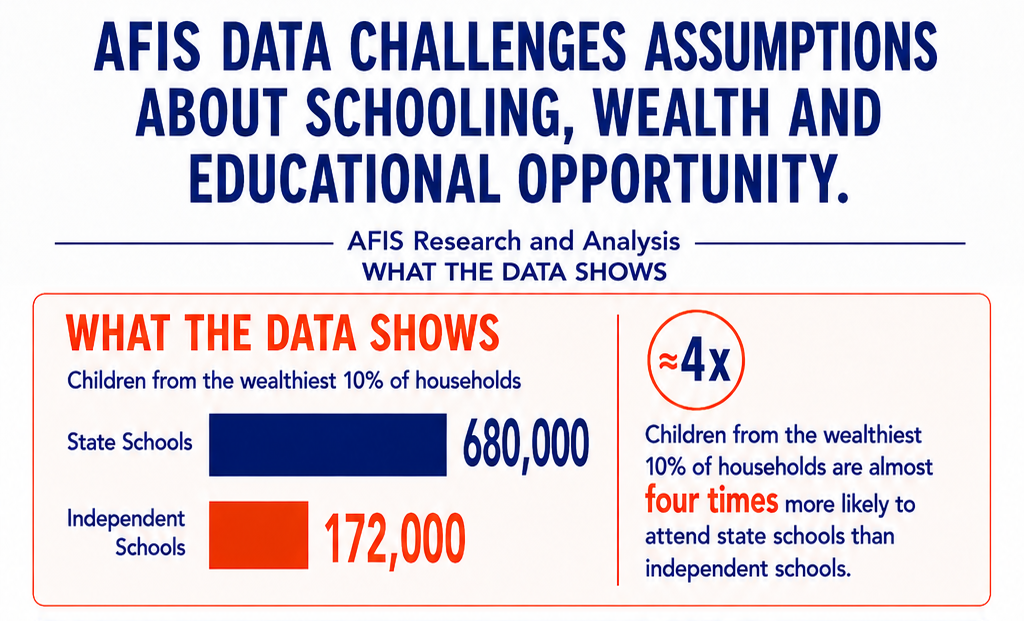
Families from all socio-economic backgrounds choose state schools, just as families from a wide range of socio-economic backgrounds are represented within the independent sector.
Not every independent school family is affluent. Not every state school child is disadvantaged.
For most parents, choosing a school is about finding a setting in which their child can thrive, taking into account their circumstances, location, and the opportunities a school can offer.
It is, however, reasonable to observe that proportionally more higher-income families are represented within the independent sector, because wealth increases the range of choices available. The same pattern exists in healthcare, housing, travel, and lifestyle more generally. Those with greater means can exercise greater choice.
Another important fact often overlooked is that many independent schools are able to offer substantial means-tested fee assistance precisely because higher-paying families donate generously. This financial cross-subsidy allows large numbers of lower-income and disadvantaged children to attend independent schools, thereby widening, rather than narrowing, access to those settings.
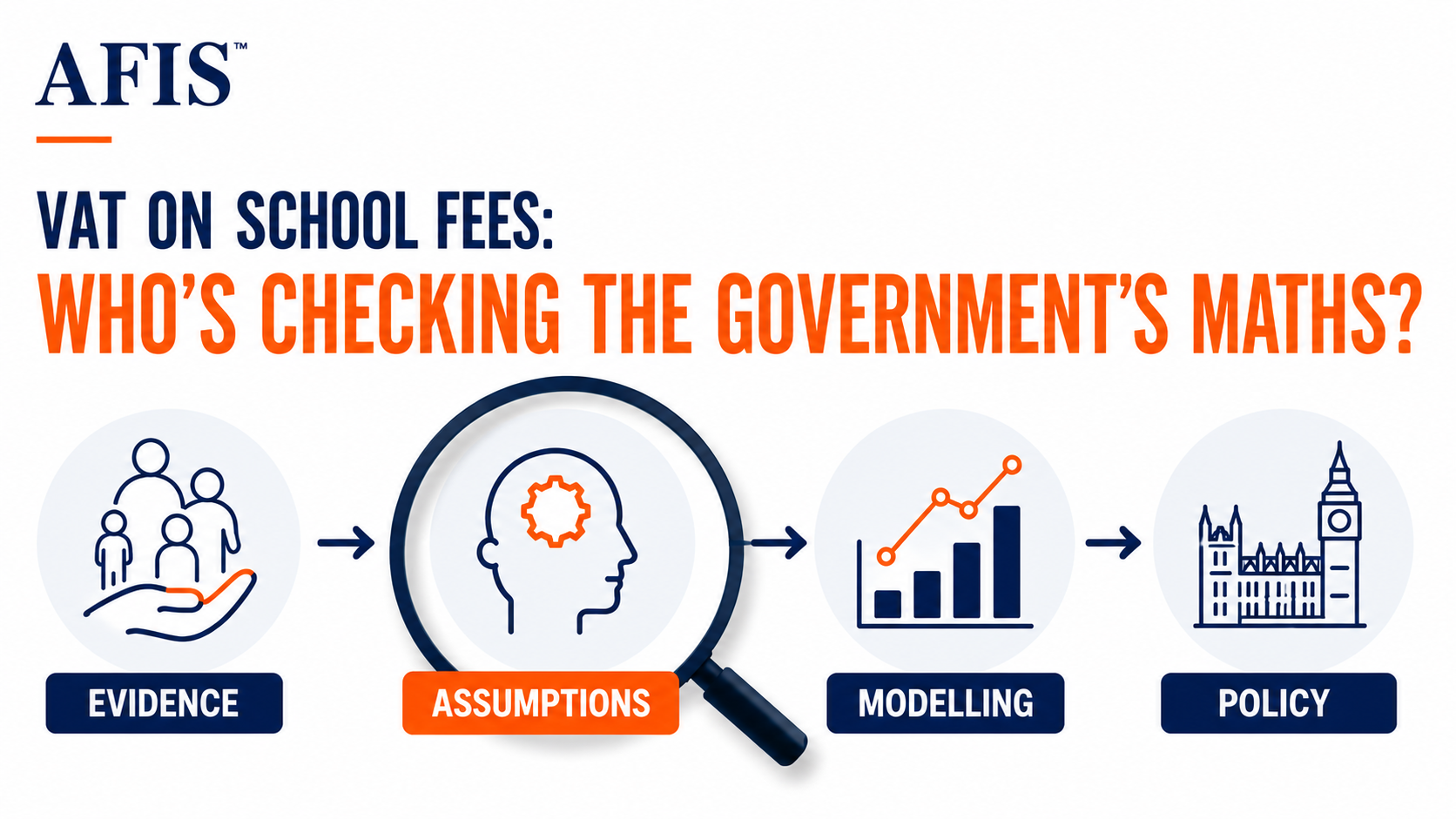
The government’s proposal to add VAT to independent school fees was framed as a mechanism to “redistribute wealth” by raising additional funds for state education.
This framing appears to rest on the assumption that independent school families are uniformly affluent and therefore able to “pay twice”; once through taxation and again through school fees.
This leads to a simple “what if” question.
If the policy goal is genuinely to increase contributions from wealthier families in order to strengthen state education, why is redistribution targeted only at families who choose independent schooling?
Why not consider means-testing contributions for state school places themselves?
The state already means-tests many services and entitlements, including free school meals, childcare support, and student finance. A similar framework could, in theory, apply to schooling:
· Families eligible for free school meals would pay nothing.
· Other families could contribute a small, tiered annual amount based on household income or wealth.
· Contributions would remain far below the actual per-pupil cost to the state.
Such a model would spread responsibility across all higher-income families, regardless of whether their children attend state or independent schools.
It would also avoid treating the act of choosing independent education as the trigger for additional taxation.
To understand why this question is not merely theoretical, it is helpful to consider what a very cautious, illustrative model might generate in practice.
Illustrative Revenue Scenario (Highly Conservative, Indicative Only)
This simplified example uses deliberately modest assumptions to avoid overstating potential impact:
· Total pupils in state-funded schools (England): ~7.9 million
· Pupils eligible for free school meals: ~26% → pay £0
· Remaining pupils potentially in scope: ~5.85 million
Hypothetical annual contributions:
· £50k–£80k household income → £250 per pupil
· £80k–£120k → £750 per pupil
· £120k–£200k → £1,500 per pupil
· £200k+ → £3,000 per pupil
Assuming cautious income distribution and allowing for non-participation and behavioural change, such a model could plausibly raise:
£2–4 billion per year
Even at the lower end of this range, the revenue would be comparable with, or exceed, the sums expected from applying VAT to independent school fees.
These figures are not a policy proposal.
They simply demonstrate that if the aim is to increase contributions from wealthier families to support state education, there are structurally neutral ways of doing so that do not single out families on the basis of their schooling choice.
Conclusion:
This is not an argument against state education, nor is it an argument against progressive taxation.
It is a question of consistency.
If fairness in education funding is defined as asking those with greater means to contribute more, then that principle should apply across the whole system, not only to families who opt out of the state sector.
The real issue is therefore not whether families choose state or independent schools.
It is whether fairness should be based on:
· What families earn or
· What families choose.
That distinction matters!