Headline Double-Act at the Next Independent Schools Forum
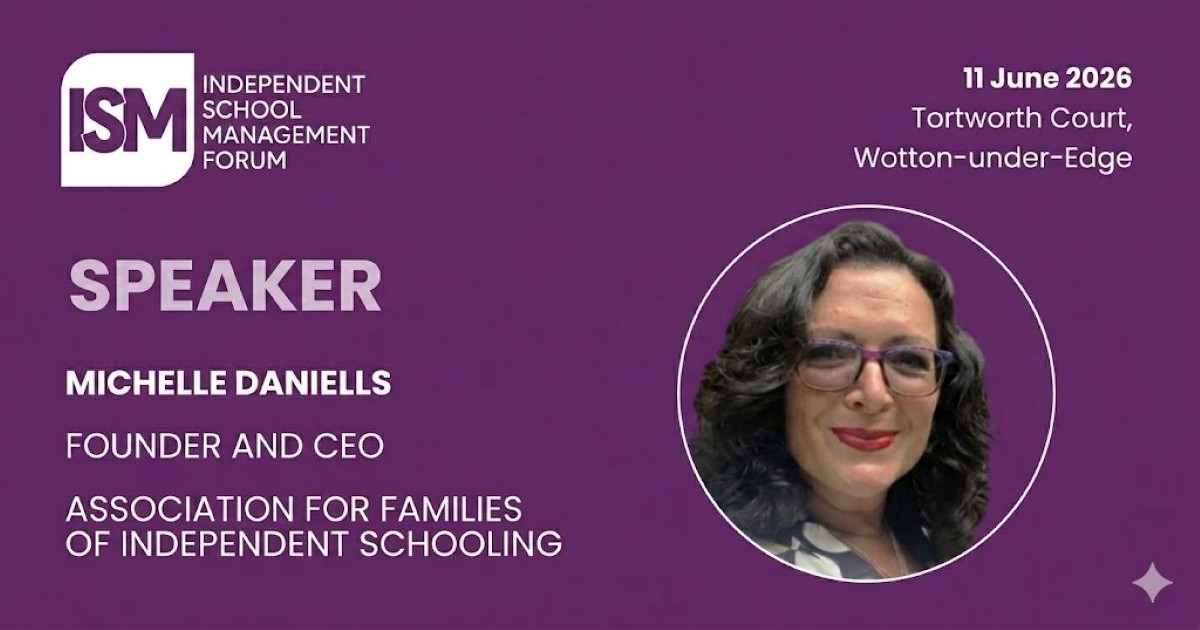
AFIS Founder and CEO, Michelle Daniells, and AFIS Founding Patron, James Wilding, BSc FRSA FCCT. Principal Emeritus, Claires Court.

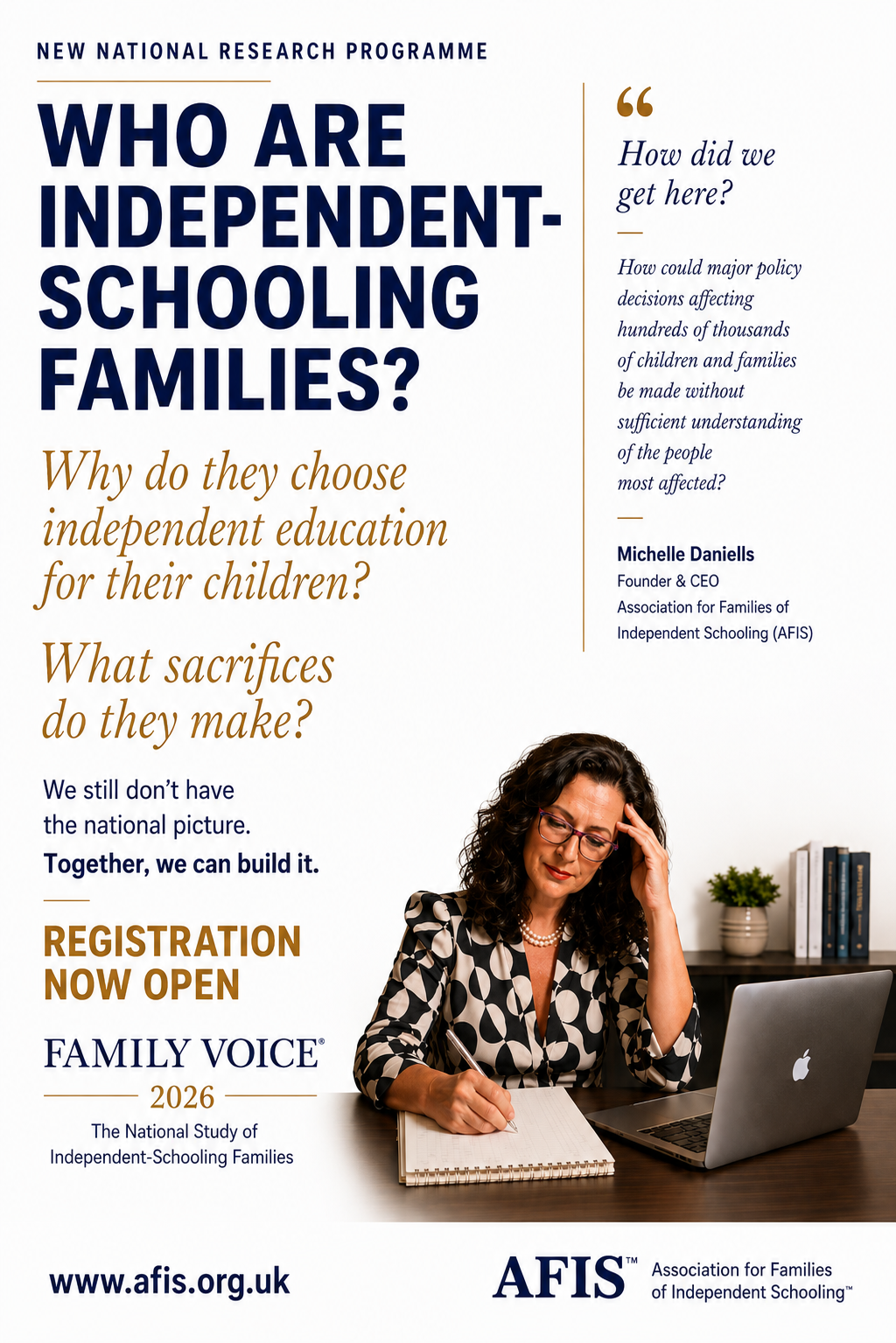
Momentum continues to build for the Association for Families of Independent Schooling (AFIS), following extraordinary growth since our launch in December last year.
In just a few short months, AFIS has become one of the fastest-growing new voices in the independent schooling landscape — attracting families, school leaders, researchers, advisers and commentators who believe the national conversation around education needs to become more balanced, more evidence-led and less driven by simplistic assumptions and political tribalism.
As part of this growing movement, AFIS Founder and CEO, Michelle Daniells, will appear alongside AFIS Founding Patron, James Wilding, at the upcoming Independent Schools Forum in what promises to be one of the standout sessions of the event.
Together, they will explore some of the most important and challenging questions currently facing independent schooling, parental choice and the future of education in Britain.
Why Britain Cannot Tax Its Way to Better Education Outcomes
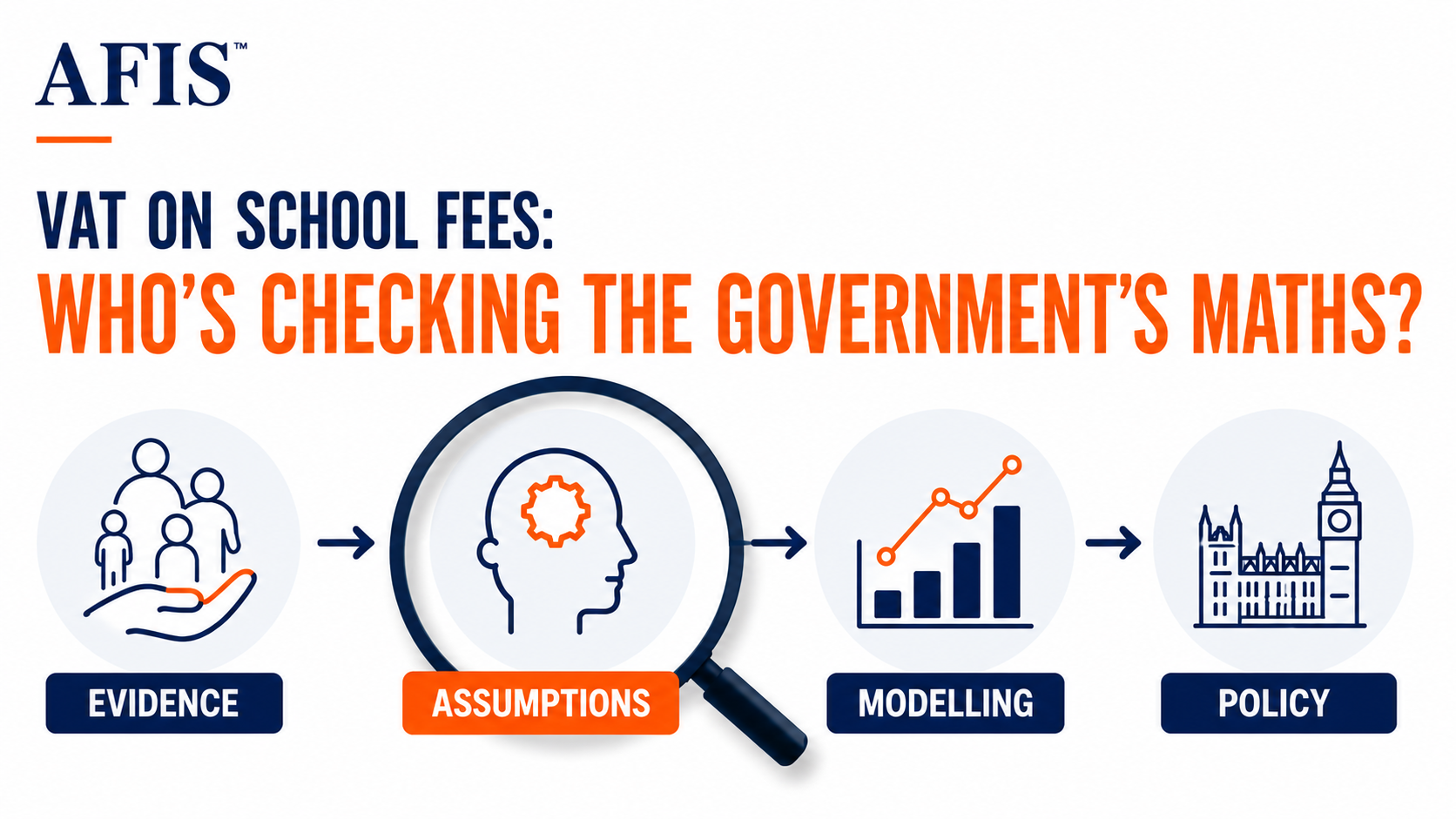
AFIS will also provide an early insight into major new research and analysis examining one of the defining education questions of our time:
Can Britain really tax its way to better education outcomes?
Our forthcoming analysis challenges many of the assumptions underpinning current political narratives and asks whether the national debate has become overly focused on school type labels, rather than the deeper cultural, family and societal factors that truly shape outcomes for children.
This work forms part of AFIS’s wider commitment to promoting a more thoughtful and evidence-based discussion around education policy, social mobility and parental choice.
Over the coming weeks, AFIS will publish detailed data, analysis and commentary exploring:
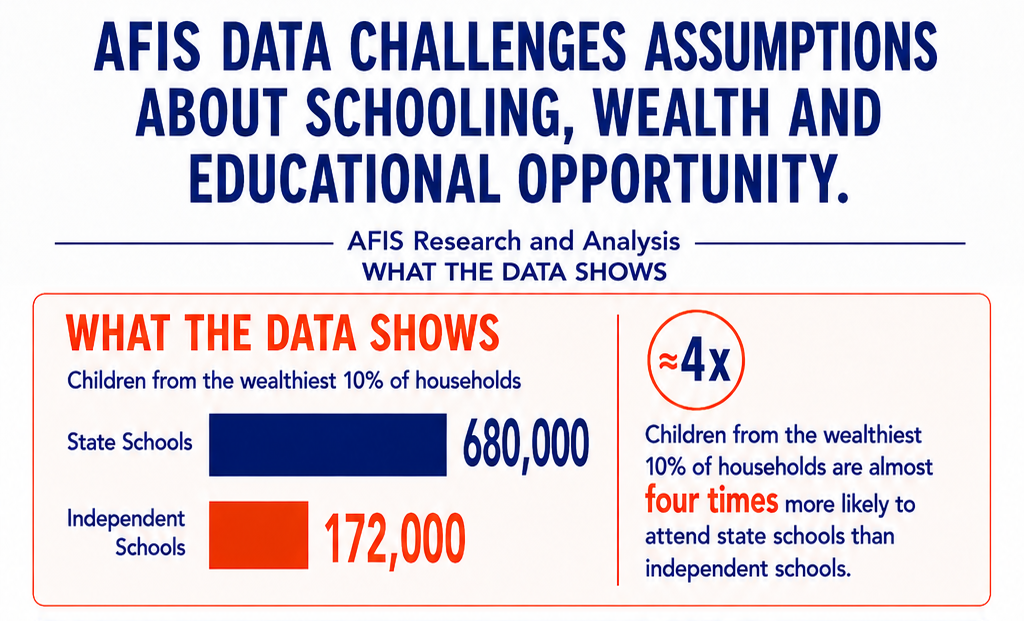
- Whether the widely repeated “7% independent vs 93% state” statistic genuinely reflects modern family realities
- The extent to which educational outcomes are driven by wealth — and whether this is being misunderstood in public debate
- The role of parental engagement, aspiration, culture and peer environment in shaping educational success
- Why simplistic “state vs independent” narratives may obscure more important drivers of inequality and opportunity
- How Britain can move toward a more nuanced understanding of educational plurality and social mobility
Whitepaper Launch: A Year of Deep-Dive Research
June will also see the official launch of AFIS’s first major Whitepaper, bringing together nearly 12 months of extensive research, analysis and case studies.
The Whitepaper will consolidate AFIS’s work across several core themes, including:
Beyond School Labels and Stereotypes
Examining whether binary school categories have become an increasingly poor proxy for socio-economic background, family aspiration and educational culture.
The Real Drivers of Educational Outcomes
Exploring the factors most consistently associated with strong outcomes across both state and independent schools — including parental engagement, shared values, expectations, stability and peer environment.
Rethinking Social Mobility Through Schooling
Questioning whether current approaches to widening access and educational equality are always targeting the right underlying issues.
The Hidden Ecosystem Around Education
Investigating the wider network of funding, support structures, external programmes and cultural capital that influence outcomes across the education system.
The Evolution of the Global International School Market
Alongside Michelle Daniells, delegates will hear from James Wilding, Principal Emeritus of Claires Court and one of the most experienced leaders in British independent education.
Holding a Guinness World Record as the World’s Longest Serving Headteacher, James Wilding will deliver a high-velocity strategic briefing on the changing face of independent schooling families and the rapidly evolving expectations being placed on schools.
His session will explore:
- The “Hidden Face” of modern independent school families
- The unseen sacrifices and changing priorities shaping parental decision-making
- The rise of the Millennial Parent and how expectations of schools are changing
- The growing role of AI in the admissions journey and school selection process
- What schools must become over the next five years to remain relevant, trusted and competitive
- Strategic insights drawn from more than 45 years of leadership experience
“Business as Usual” Is No Longer Enough
One of the key themes emerging from both AFIS research and James Wilding’s work is clear:
In 2026, “business as usual” is a strategy for decline.
The demographics, motivations and expectations of independent school families are evolving rapidly. Many schools are still operating on assumptions about their parent communities that no longer reflect reality.
Families today are navigating a far more complex environment — financially, culturally and socially — while also facing growing political scrutiny and increasingly polarised public narratives around education.
At the same time, technology and AI are transforming how parents research schools, evaluate value, compare outcomes and make decisions.
The schools that thrive in the coming decade will be those that understand these shifts early and respond with clarity, adaptability and purpose.
A Growing National Conversation
The Independent Schools Forum comes at a pivotal moment for the sector.
AFIS believes Britain urgently needs a more mature and constructive national conversation about education — one that moves beyond crude stereotypes and recognises the importance of diversity, parental choice and educational plurality within a healthy society.
Our work is not about division. It is about evidence, understanding and ensuring that all families are represented fairly within public debate.
As AFIS continues to grow, we remain committed to championing parental voice, challenging simplistic narratives and helping to build a more informed conversation about what truly helps children flourish.