𝗣𝗵𝘆𝘀𝗶𝗰𝗮𝗹 𝗽𝗿𝗼𝗱𝘂𝗰𝘁𝘀 𝗳𝗼𝗿 𝗰𝗵𝗶𝗹𝗱𝗿𝗲𝗻 𝗺𝘂𝘀𝘁 𝗺𝗲𝗲𝘁 𝘀𝗮𝗳𝗲𝘁𝘆 𝘀𝘁𝗮𝗻𝗱𝗮𝗿𝗱𝘀 𝗯𝗲𝗳𝗼𝗿𝗲 𝘀𝗮𝗹𝗲. 𝗪𝗵𝘆 𝗱𝗼𝗻’𝘁 𝗱𝗶𝗴𝗶𝘁𝗮𝗹 𝗽𝗹𝗮𝘁𝗳𝗼𝗿𝗺𝘀?
Following on from my recent post about “child-proof lids” and safety by design (and the response to it) I’ve been thinking about other parallels.
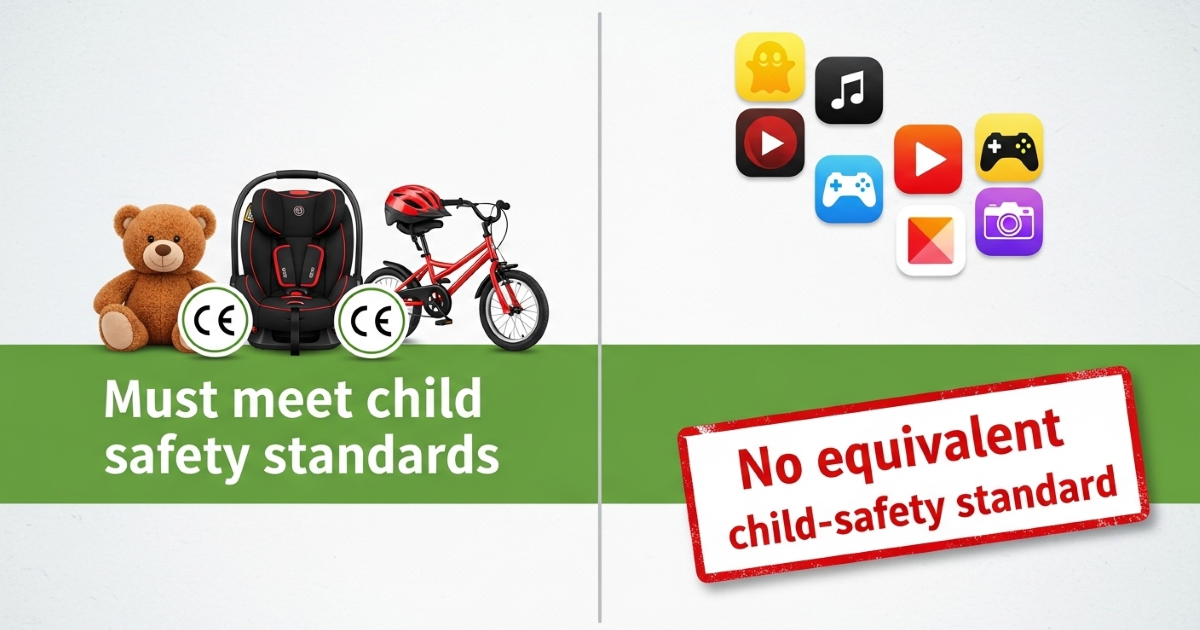
In the UK, we already accept, almost without debate, that physical products must meet general safety standards to protect consumers, and that products intended for children must meet additional child-safety standards before they can be sold.
For example, toys and children’s products must comply with specific safety regulations and be tested and certified before they reach the market.
Toys.
Bicycles & scooters
Sports equipment
Manufacturers must assess and demonstrate that these products meet essential safety requirements before sale. If they don’t, they can be removed from the market.
That is protection by design.
We don’t ban toys because some could be dangerous.
We require safer materials, safer construction, age-appropriate design and clear labelling upfront.
The same principle runs through:
• 𝗖𝗵𝗶𝗹𝗱-𝗿𝗲𝘀𝗶𝘀𝘁𝗮𝗻𝘁 𝗺𝗲𝗱𝗶𝗰𝗶𝗻𝗲 𝗽𝗮𝗰𝗸𝗮𝗴𝗶𝗻𝗴
• 𝗔𝗴𝗲-𝗿𝗮𝘁𝗶𝗻𝗴𝘀 𝗳𝗼𝗿 𝗳𝗶𝗹𝗺𝘀, 𝗧𝗩 𝗮𝗻𝗱 𝗴𝗮𝗺𝗲𝘀
• 𝗦𝗮𝗳𝗲𝘁𝘆 𝘀𝘁𝗮𝗻𝗱𝗮𝗿𝗱𝘀 𝗳𝗼𝗿 𝗽𝗿𝗼𝗱𝘂𝗰𝘁𝘀 𝗮𝗶𝗺𝗲𝗱 𝗮𝘁 𝗰𝗵𝗶𝗹𝗱𝗿𝗲𝗻
not to stop children playing, exploring or using these products.
It exists to reduce foreseeable risk for vulnerable users.
Now, compare that with the digital spaces used daily by millions of children.; social media platforms, games and apps that profoundly shape attention, behaviour and wellbeing:
Where's the equivalent child-safety design standard?
Yes, the UK has taken steps through the Online Safety Act and the Children’s Code, which focus largely on harmful content, risk assessments and age assurance.
But we still do not treat major digital platforms as products that must meet clear, visible, child-safety design standards 𝙗𝙚𝙛𝙤𝙧𝙚 they are launched or widely used by children.
This isn’t about banning the internet for children.
It isn’t about banning smartphones.
It isn’t even about banning social media.
It’s about asking for the digital equivalent of what we already expect elsewhere:
Child-safe-by-design products.
So perhaps the more useful question isn’t:
“𝘚𝘩𝘰𝘶𝘭𝘥 𝘸𝘦 𝘣𝘢𝘯 𝘱𝘩𝘰𝘯𝘦𝘴 𝘢𝘯𝘥 𝘴𝘰𝘤𝘪𝘢𝘭 𝘮𝘦𝘥𝘪𝘢 𝘧𝘰𝘳 𝘶𝘯𝘥𝘦𝘳-16𝘴?”
But:
“𝗪𝗵𝗮𝘁 𝗰𝗵𝗶𝗹𝗱 𝘀𝗮𝗳𝗲𝘁𝘆 𝘀𝘁𝗮𝗻𝗱𝗮𝗿𝗱𝘀 𝘀𝗵𝗼𝘂𝗹𝗱 𝗱𝗶𝗴𝗶𝘁𝗮𝗹 𝗽𝗿𝗼𝗱𝘂𝗰𝘁𝘀 𝗵𝗮𝘃𝗲 𝘁𝗼 𝗺𝗲𝗲𝘁 𝗯𝗲𝗳𝗼𝗿𝗲 𝘁𝗵𝗲𝘆 𝗮𝗿𝗲 𝗰𝗼𝗻𝘀𝗶𝗱𝗲𝗿𝗲𝗱 𝗮𝗰𝗰𝗲𝗽𝘁𝗮𝗯𝗹𝗲 𝗳𝗼𝗿 𝗰𝗵𝗶𝗹𝗱𝗿𝗲𝗻 𝗮𝘁 𝗮𝗹𝗹?”
(I’ve been noticing how often this same safety-by-design logic shows up in everyday life. I’ll share some more parallels soon).
I'd welcome your thoughts.
Opinion
Safety standards: Physical vs Digital
Michelle Daniells
If you support parental choice in education and value the work of the Association for Families of Independent Schooling, please consider:
- Helping to recruit new members through your own networks
- Volunteering to work with us, even just for a couple of hours a month
- Becoming an official AFIS Ambassador
- Making a donation
Get in touch with our team: hello@afis.org.uk and get involved
Related Articles

AFIS is a non-profit organisation dedicated to championing parental choice, securing fairer representation for independent-schooling families, supporting members with benefits and resources, and widening access to independent education.
AFIS and Association for Families of Independent Schooling are registered trademarks of AFIS UK LTD.
The Association for Families of Independent Schooling (AFIS) C.I.C. is a community interest company, incorporated in England and Wales, company number 16817786.