Why Most Students Miss Out on Degree Apprenticeships (It's Got Nothing to Do With Ability)
Most students don't miss out on degree apprenticeships because they're not capable.
They miss out because they start thinking seriously about them far too late.
Not in Year 10. Not in Year 11. In Year 13 - when applications are already open, deadlines are close, and the bar is high. By then it's not about potential anymore. It's about preparation. And preparation doesn't get built in a few weeks.
Most parents find out how competitive degree apprenticeships actually are at exactly the wrong moment.
After the rejection.
The process isn't unfair. But it is unforgiving - and most students go into it without really understanding what they're up against. They apply with genuine enthusiasm and real ability, and they still don't get through. Not because they weren't good enough, but because other candidates had been building their evidence to support their applications for much longer.
The Preparation Gap Nobody Talks About
Degree apprenticeships are graduate-level programmes, often with some of the country's biggest employers - and the application processes reflect that. Assessment centres, competency-based interviews, aptitude tests. Employers want evidence, not potential.
That evidence has to exist before the application opens. It can't be manufactured under deadline pressure. It gets built through the choices a student makes over months and years - the opportunities they seek out to build relevant experience, what they've got involved in, how they've reflected on what they've learned.
Most families don't see that gap until it matters.
By the time applications open - often in the autumn of Year 13 - students who are truly competitive have already been building their case for months. Or years. The ones starting from scratch are already massively behind their competition.
What Starting Early Really Looks Like
Starting early doesn't mean sitting a 13-year-old down and asking them to choose a career. It means building awareness gradually - a habit of connecting what they're doing now with what will matter later.
A Year 10 student doing work experience in a field they're curious about. Not for the CV. To find out if the interest is real.
A Year 11 student who can actually talk about a project they completed - what they did, what they learned, what they'd do differently.
A Year 12 student who uses their summer with intention - because for them, early doesn't mean years away. It means right now.
Timing. Get Ready.
Applications for many of the most sought-after degree apprenticeship programmes - PwC, BAE Systems, Rolls-Royce, Deloitte, HSBC - open in October or November. Some open in January. That's five months away. It sounds like plenty of time.
It isn't. Not if you're starting from scratch in September.
The students who secure these programmes don't suddenly get ready in the autumn. At a minimum, they use the summer to build the foundations that make their application competitive before the window even opens.
In practice, that means:
A LinkedIn profile that does real work. Not a blank page with a candid photo. A profile that makes a recruiter stop and think: this person is motivated and committed to a career in the sector.
A CV that translates experience into skills. Not a list of GCSEs. Evidence of who they are and how they think.
A shortlist of target employers. Not wait and see. But multiple potential programmes that fit their interests, strengths, and ambitions - researched properly before the rush begins.
An understanding of what the process actually involves. Online tests. Video interviews. Assessment centres. Most students find out about these stages after they've already failed one. That's too late.
The summer between Year 12 and Year 13 is the single most valuable preparation window in the entire degree apprenticeship journey. Most families spend it doing nothing career-related. The ones who use it are the ones who go into the autumn with an edge most of their peers won't have.
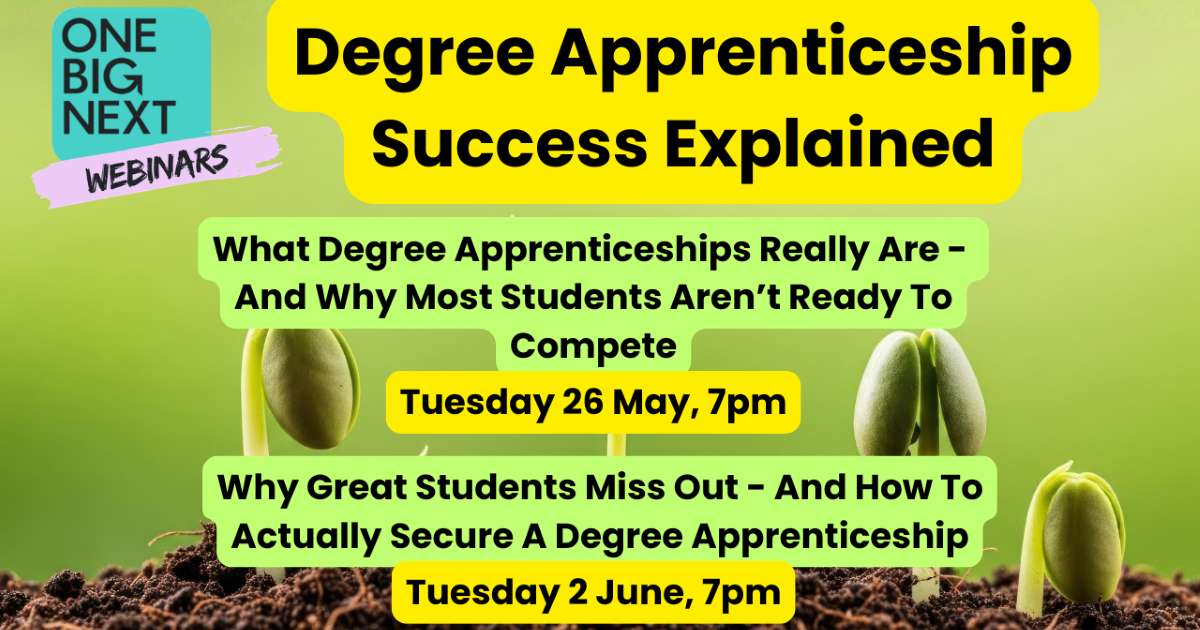
Free Webinar: Degree Apprenticeships - What Parents Need to Know
At OneBigNext, I work with young people and families who want to get ahead of this - not catch up with it. Which is why I'm running a free, two-part live webinar series.
Session 1 - Tuesday 26 May, 7pm: The Reality
What degree apprenticeships actually are, how the application process works, and why timing matters more than most families realise.
Session 2 - Tuesday 2 June, 7pm: The Strategy
How students build the kind of profile employers are actually looking for - long before they apply.
This is for parents of 15-18 year olds who want to give their child a real head start. Young people are also very welcome.
Both sessions are free. Replay available for a limited time.
👉 Register here: https://www.onebignext.com/webinar
Because when it comes to degree apprenticeships, starting early isn't an advantage.
It's the baseline.
If You Want to Go Further
The webinar will give you an overview. If you want to act on it, here's how I work with students directly.
Future Pathways Starter - Year 10 & 11
A career profiling assessment and 1:1 coaching session to help your child understand their strengths, aptitudes and interests, followed by two group sessions on what employers’ value and how to start building evidence. The right starting point for students who want to get ahead before Year 12.
Degree Apprenticeship Primer (Group) - Year 12
A six-session group programme covering direction, experience, personal branding, opportunities and applications. Students leave with a clear roadmap and a profile that's ready for the recruitment process.
Degree Apprenticeship Accelerator (1:1) - Year 12
A bespoke, eight-session 1:1 programme that takes students through the full preparation and recruitment journey - including career profiling, market strategy, applications, assessment centres, interviews, and managing outcomes. Students also have ongoing access to their coach between sessions.
All programmes are available through OneBigNext. If you're not sure which is the right fit, get in touch and I'll help you work it out.
Sandra Davis is a careers and employability specialist working with young people aged 13-25. She is the founder of OneBigNext® and helps young people understand what employers are really looking for - and how to intentionally build the skills and experiences that will set them apart.
You can visit Sandra's website and find out more here: OneBigNext.com