Click HERE to engage with AFIS on Linkedin
Much of the debate around education and social mobility focuses on one statistic:
“Only 7% of children attend independent schools, yet privately educated people remain overrepresented in elite professions.”
That is true. (And is testimony to the power of high-quality teaching, strong school cultures, positive peer environments, parental engagement, and shared values between families and schools.)
The Sutton Trust’s 𝘌𝘭𝘪𝘵𝘪𝘴𝘵 𝘉𝘳𝘪𝘵𝘢𝘪𝘯 research highlights the overrepresentation of privately educated people among lawyers, senior judges, politicians, journalists, diplomats, medics and other positions of influence, even podcasters.
But here’s an important question that rarely gets asked publicly:
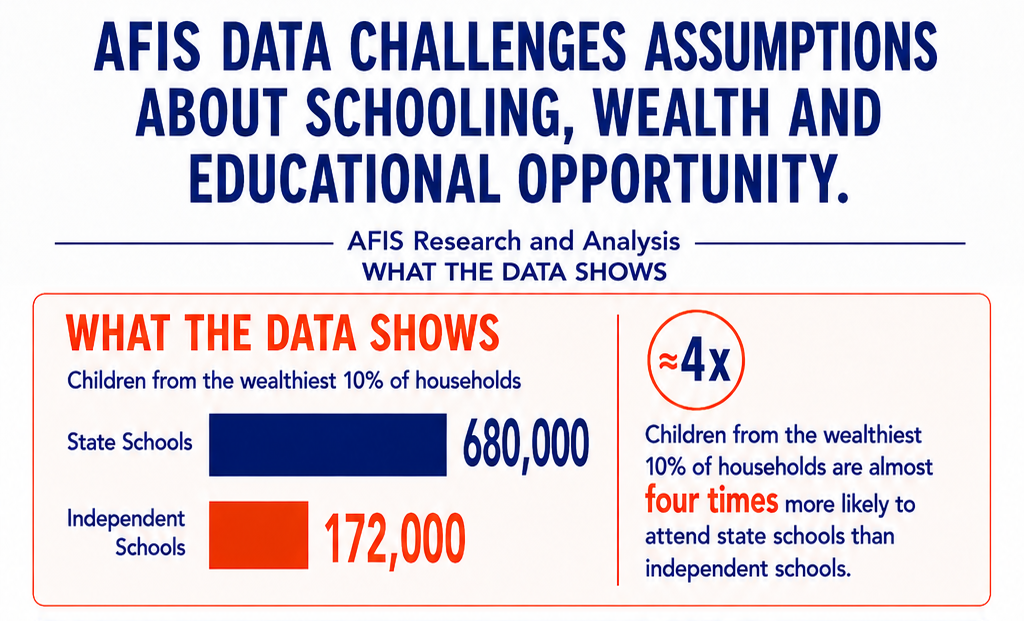
How many of the approximately 680,000 children from top-income families in state education eventually become part of this so-called “elite”?
Of course, wealth and financial stability can confer advantages, and independent schooling is fee-paying. But this framing can also overlook the many affluent families in the state sector, while simultaneously ignoring pupils in independent schools who attend through means-tested fee support.
There are 4 times more “affluent” families in state education than in independent schools.
Perhaps the key question is not whether the correlation exists, but what is actually causing it.
How do children from highly engaged, affluent, professionally connected families in the state sector compare with similarly advantaged families in the independent sector?
It would make sense that educational outcomes are shaped by a combination of factors, including:
• parental engagement
• educational values such as aspiration and work ethic
• family environments
• geography and housing
• peer groups and expectations
• cultural and professional networks
In other words: concentrated family capital and a shared educational culture; alignment between families, schools, aspiration, discipline and expectations.
We see similar patterns across:
• grammar schools
• selective sixth forms
• top comprehensives
• faith schools
• high-performing free schools
• and independent schools
The Association For Families Of Independent Schooling (AFIS) C.I.C. is asking questions that too often go unasked in the debate.
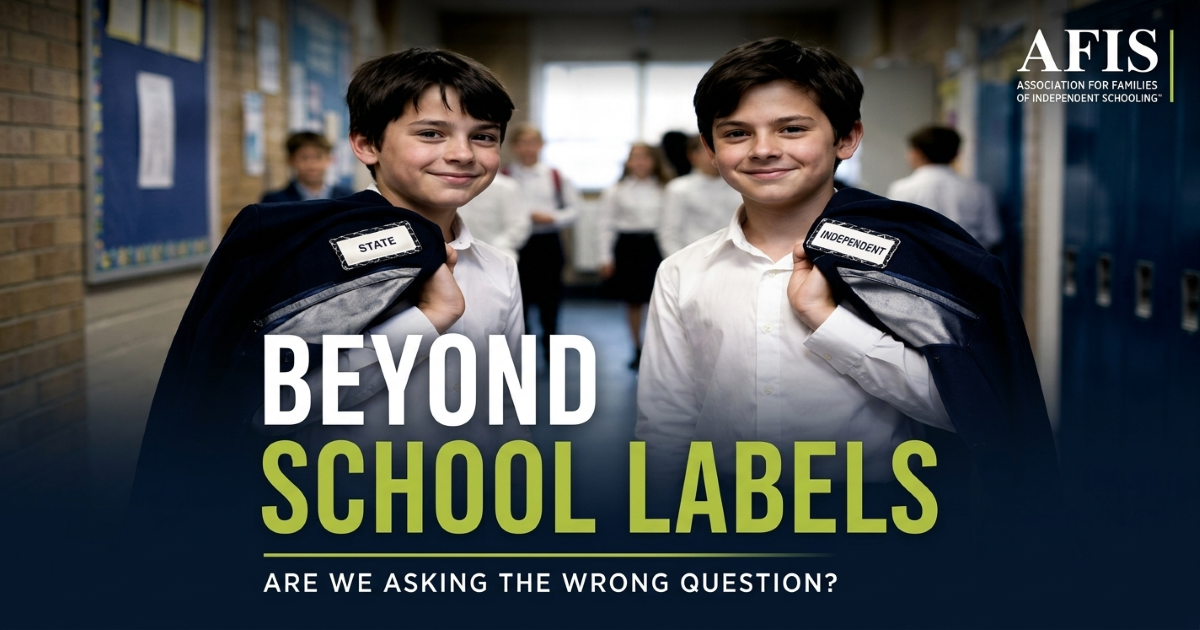
We are looking beyond simplistic binary labels and assumptions about “state vs private” schooling, because children and families are more complex than political narratives suggest.
All children deserve better than to be profiled, categorised and defined by simplistic labels and assumptions.