STOP PRESS: VAT on SCHOOL FEES 4th June 2026
Supreme Court Grants Permission for Landmark Appeal
The Association for Families of Independent Schooling has contributed new evidence and analysis to support the challenge to VAT on school fees and will now seek to place further family evidence and perspectives before the Supreme Court as the landmark appeal moves forward.
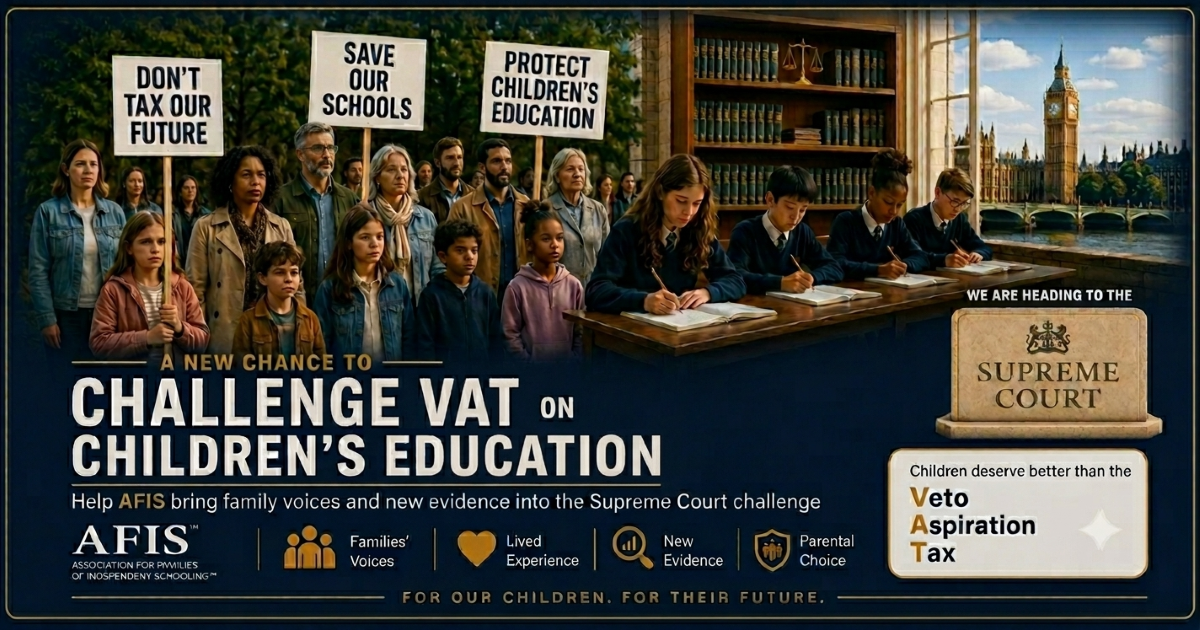
AFIS welcomes today's announcement that the Supreme Court has granted permission for a landmark appeal against the Government's VAT on school fees policy.
The appeal combines challenges brought by Charedi Jewish families and a coalition of Christian schools, parents and pupils. The Supreme Court will consider arguments that the policy has disproportionate consequences for some children, families and schools, and whether those impacts were properly justified.
Michelle Daniells, Founder and CEO of AFIS, said:
"This is the first genuinely positive development independent school families have received for some time.
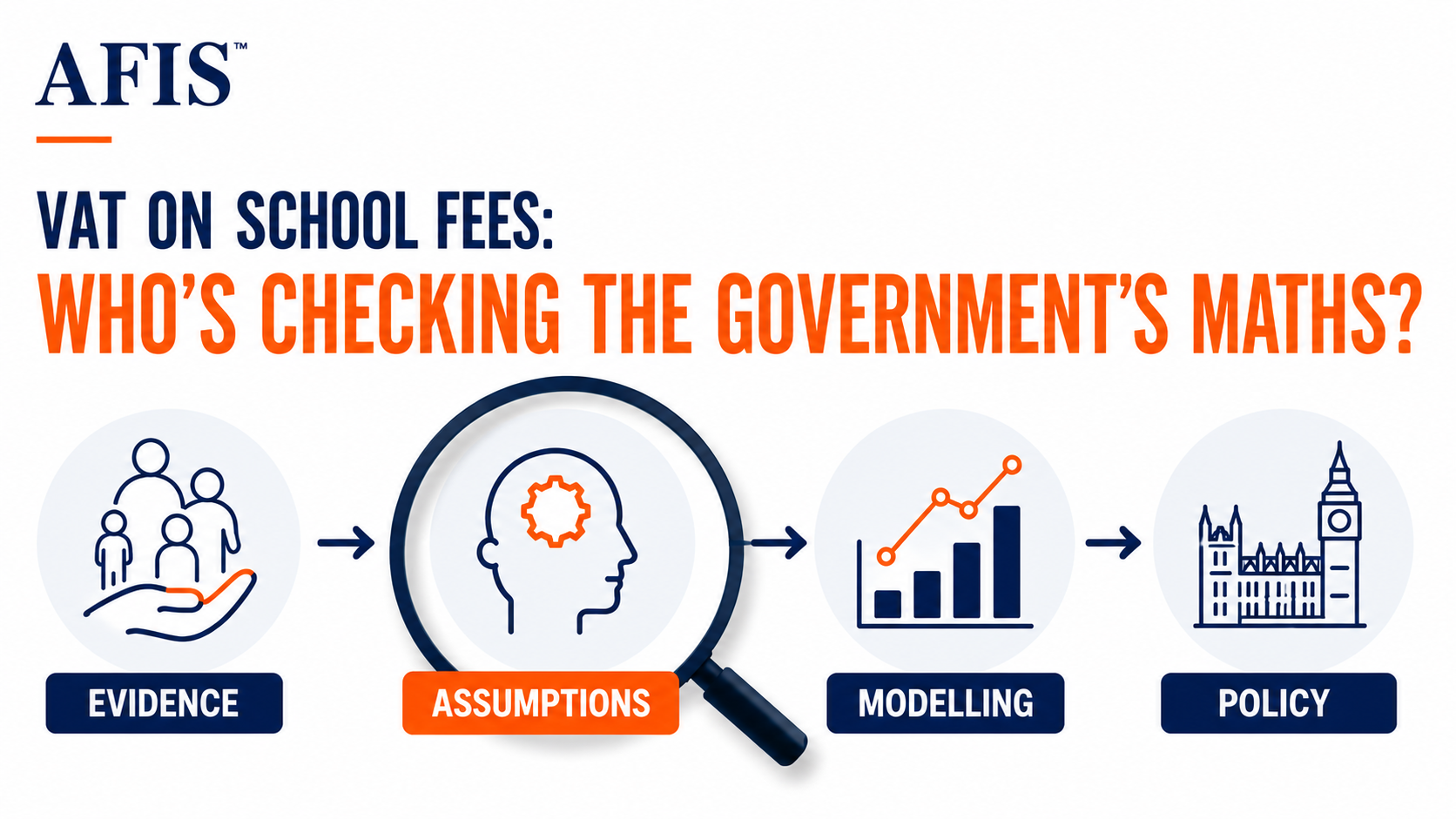
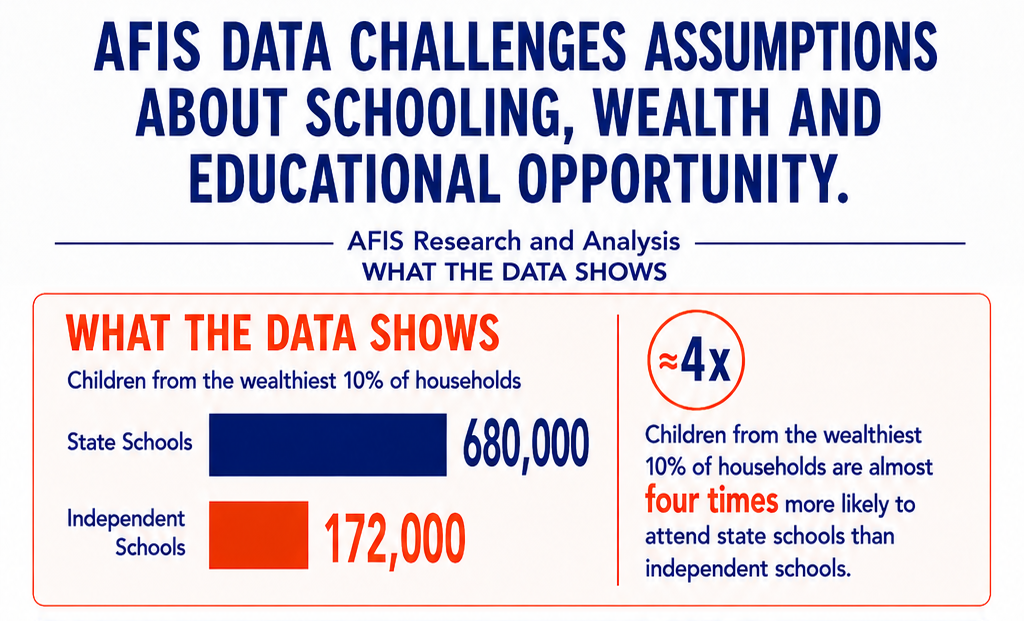
For too long, public debate has been dominated by assumptions, stereotypes and political narratives about who our families are and why they choose independent schools.
The Supreme Court's decision creates an opportunity for evidence to be examined more closely and for some of those assumptions to be tested properly."
Background
Following the Government's announcement that VAT would be imposed on independent school fees, a number of schools, parents and pupils commenced legal proceedings challenging the policy.
In 2025, a number of parents, pupils and schools brought a High Court challenge, supported by the Independent Schools Council (ISC) and their Education Not Taxation campaign. The High Court dismissed the challenge in June 2025.
While the ISC and Education Not Taxation did not pursue further appeals following the High Court judgment, a group of Charedi Jewish families together with Christian schools, parents and pupils remained determined to continue the fight.
Despite setbacks in both the High Court and Court of Appeal, they chose to pursue the case further, investing significant time, effort and resources in seeking further judicial scrutiny of the policy. Their perseverance has now resulted in the Supreme Court granting permission for the appeal to be heard.
One of the schools involved in the appeal welcomed the decision.
Caroline Santer, Headteacher at The King's School, Hampshire, said:
"We are encouraged that the Supreme Court will now examine this case properly. The VAT policy is already forcing families into heartbreaking decisions and putting schools like ours under severe pressure. This appeal is about whether the law properly recognises the real impact on children, families and the communities we serve."
AFIS Joins the Case
Several months ago, AFIS approached Christian Concern to share information about our work on behalf of independent school families and the growing body of research we had assembled concerning the impact of the VAT policy.
We were subsequently invited to join the case and contribute evidence, analysis and family perspectives to the proceedings.
While the existing appeal raises important issues concerning faith-based education, AFIS believes the case also raises broader questions about parental choice, demographic diversity, proportionality, equality under the law and the unintended consequences of public policy.
Our evidence includes research into family circumstances, school closures, pupil displacement, post-16 capacity pressures and the assumptions that have shaped public and political debate about independent schooling.
Looking Ahead
AFIS will now be instructing solicitors and appointing counsel to advise on submissions to the Supreme Court.
While the hearing is unlikely to take place for many months, the decision provides an important opportunity for the wider impact of the policy to receive scrutiny before the highest court in the land.
Michelle Daniells added:
"We were really pleased to be invited to contribute to the application to appeal to the supreme court. We are even more delighted now, with the positive outcome that will see our evidence and analysis presented to the highest court in the land, for the benefit of all independent schooling families.
Every week I speak to parents making extraordinary sacrifices for their children's education. Many chose independent schools only after local state options failed to meet their child's needs
Our families deserve better understanding, better representation and fairer treatment than they have received throughout much of this debate.
I was genuinely shocked when the Court of Appeal suggested that parents who do not wish to use the state system could simply choose home education instead.
For the overwhelming majority of families, that is not a realistic alternative. Parents are balancing work, finances, caring responsibilities and the individual needs of their children.
Many of our families chose independent schooling only after local state options failed to meet those needs. They also want their children to experience a traditional school environment, with all the benefits that come from daily social interaction, pastoral care, extra-curricular opportunities, specialist teaching and learning alongside their peers.
AFIS strongly supports home education as an important and legitimate element of parental choice. Many families do an extraordinary job educating their children at home.
However, it should not be presented as a practical alternative simply because families are being priced out of their chosen schools by government policy.
Suggesting that home education is an obvious substitute demonstrated just how poorly understood many independent school families remain."
This case is about far more than faith schools. It is about parental choice, proportionality, equality under the law and whether school type should ever be used as a proxy for wealth, privilege or disadvantage.
Since the policy was introduced, we have seen significant pupil losses across the independent sector, more than 100 schools close, merge or announce closure, and growing evidence that some of the wider consequences were not fully anticipated.
Children do not choose their schools. Yet increasingly they are judged according to simplistic labels and assumptions. AFIS was established to challenge those assumptions with evidence, and we look forward to ensuring that family voices form part of this important conversation."