Click HERE to engage with AFIS on Linkedin
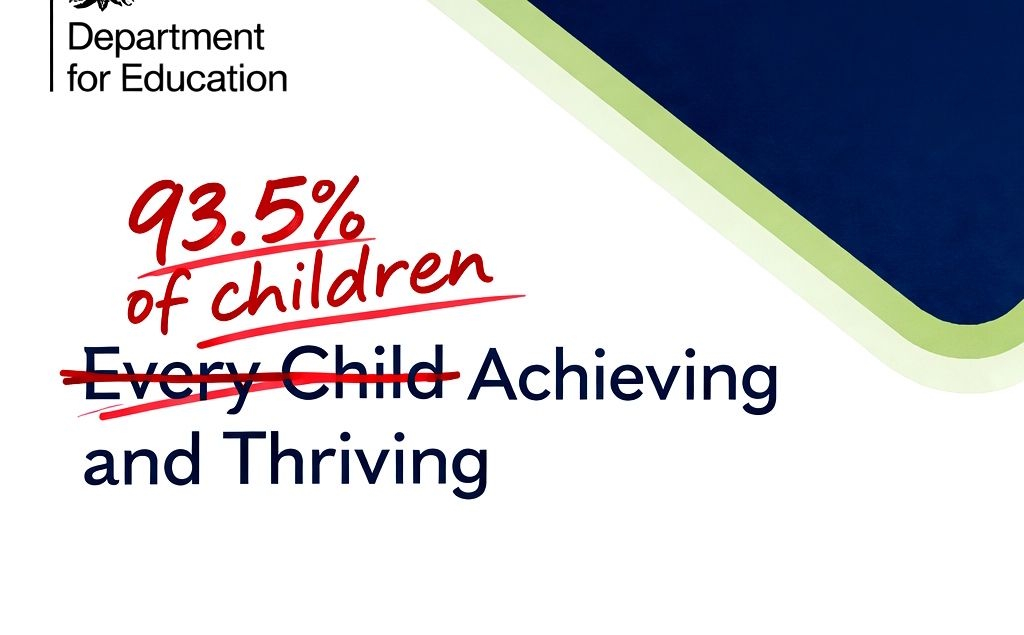
The Department for Education’s new paper is titled “Every Child Achieving and Thriving”
But reading it, we are left with an obvious question: does “every child” really mean every child?
Around 6.5% of children (roughly 1 in 15) are educated in independent schools. That’s not a fringe group. It’s a population comparable in scale to university students; yet one is explicitly planned for in policy, and the other is largely absent from the government’s strategic thinking on education.
Of course, independent schools sit outside the state system and families choose them, for a wide range of valid reasons, and often because the alternative does not meet their child’s needs.
Government is also choosing to treat independent schools as commercial businesses for tax purposes; while other education and childcare providers, such as nurseries and universities, are not approached in the same way. That inconsistency raises important questions, but is perhaps a debate for another time.
All this creates a contradiction.
Because you cannot, on the one hand, treat schools as businesses for the purposes of taxation, and on the other, talk about “every child” while excluding the children within them from your strategic thinking.
That’s not a technical distinction. It’s a choice.
Aside from a narrow reference to independent special schools in SEND provision, there is no meaningful consideration of the 6.5% of children in mainstream independent education.
At the same time, the paper talks about:
- “every school”
- “the school system”
all of which actually apply only to the state sector.
So let’s be clear: when government says “every child”, it does not mean 100% of children. It means children in state schools.
That might be the policy reality. But it is not what the language suggests and not what the public hears.
And the consequences are real. Policies like VAT on fees and the removal of business rates relief are forcing thousands of children to move mid-education, often into the state system, with knock-on effects for capacity and provision there, and clear implications for the continuity of education and wellbeing of those children.
You don’t have to support independent education to see the inconsistency here.
If we are going to say “every child achieving and thriving”, then we should either mean it; or be honest about the limits of what we’re actually describing.