Complete the Parent and Carer Voice survey: Survey
Share the GEC Homes website with your family and friends.
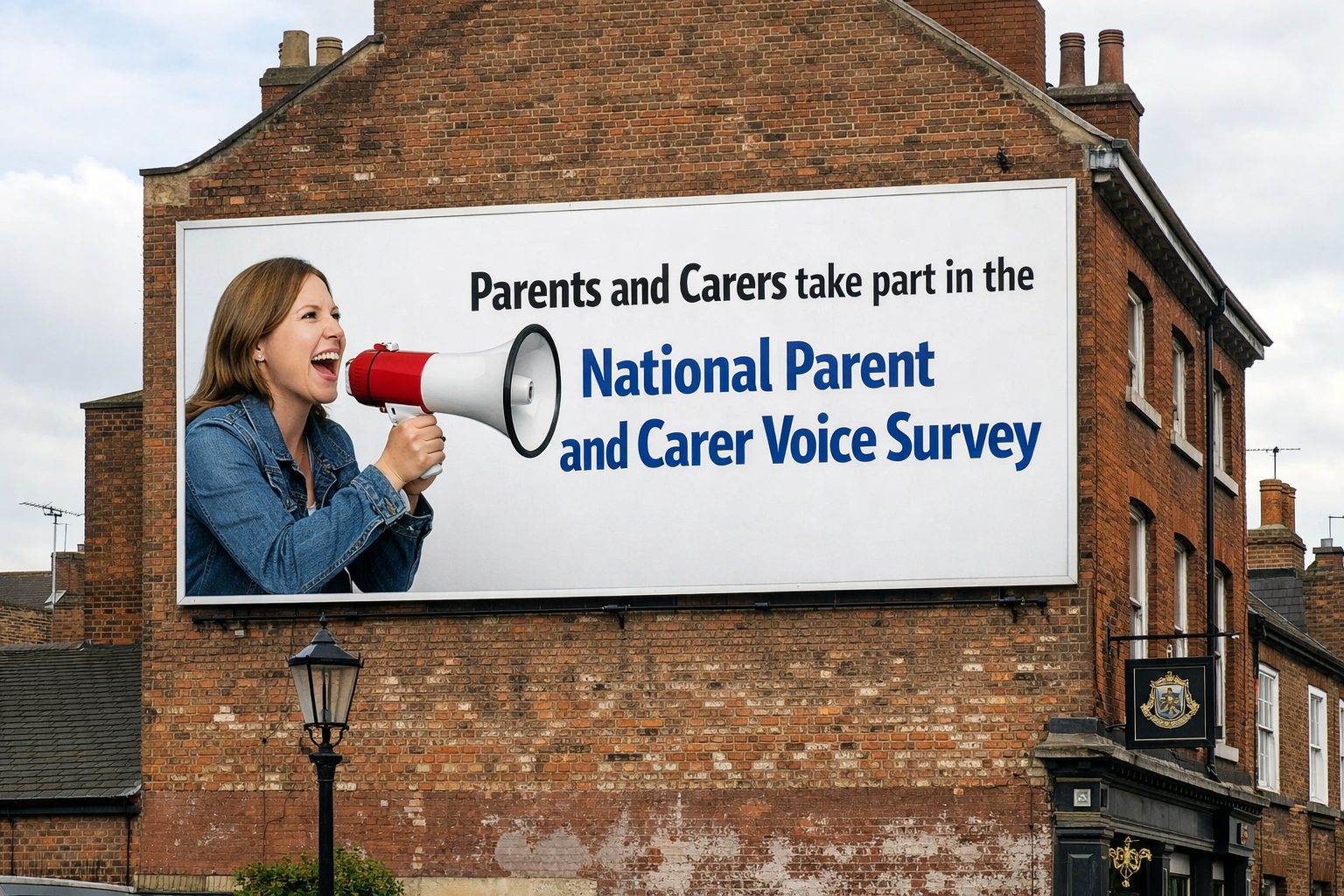
The Association for Families of Independent Schooling is collaborating with Global Equality Collective to bring you the National Parent and Carer Voice survey. The GEC led national survey captures the voice and experiences of families more accurately.
Global Equality Collective have big ambitions to:
“Build the largest and most inclusive dataset of parents and carer voice in education”
This national survey wants YOUR experiences. What are the realities of attendance, SEND support, wellbeing, communication with schools and the impact education has on home life.
Dr Nicole Ponsford, Doctoral Researcher and Founding CEO, GEC said “For years in education we have talked about student voice and increasingly about staff voice. But one perspective is still missing from most datasets: families. Through GEC Homes, we want to change that.”
Michelle Daniells, AFIS CEO said “I urge all AFIS members to take part in this important national survey. Ensuring that the views and lived experiences of AFIS parents and carers are represented in the final data, is vital.”
Take part!
As a member of AFIS, you know the quality of education your young people receive is important. This national survey gives you an opportunity to share your insights on how the education system operates and to share the experiences and relationships you have with your schools.
The more AFIS parents and carers take part, the more valuable and insightful the research data and the harder families are to ignore.
The GEC survey is open until Friday 9 May 2026.
AFIS Research
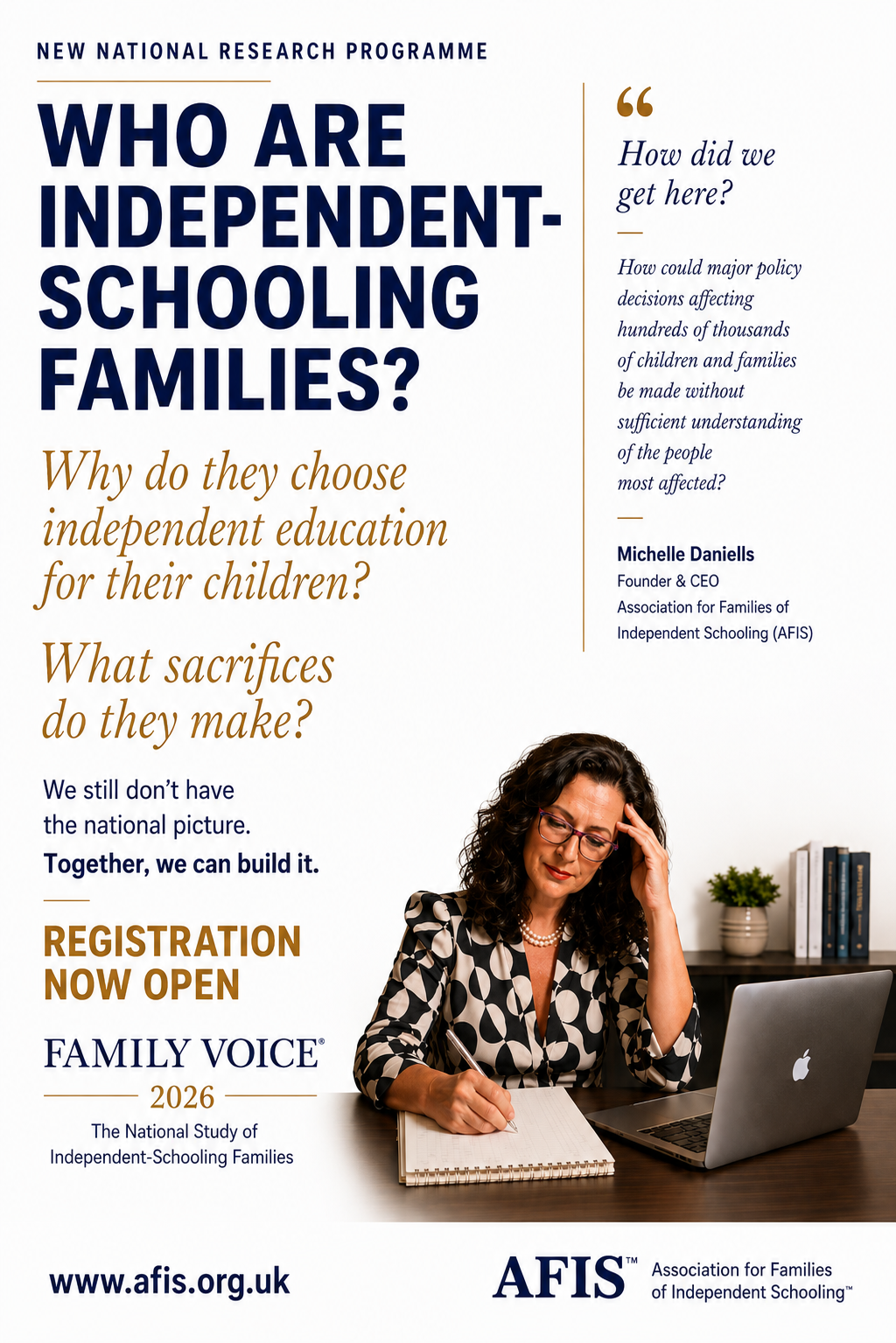
Later this year AFIS with the University of Chichester, will be conducting independent research to capture the real experiences of families who choose independent schooling and to bring a more balanced understanding of who independent school families are and why they make the choices they do.
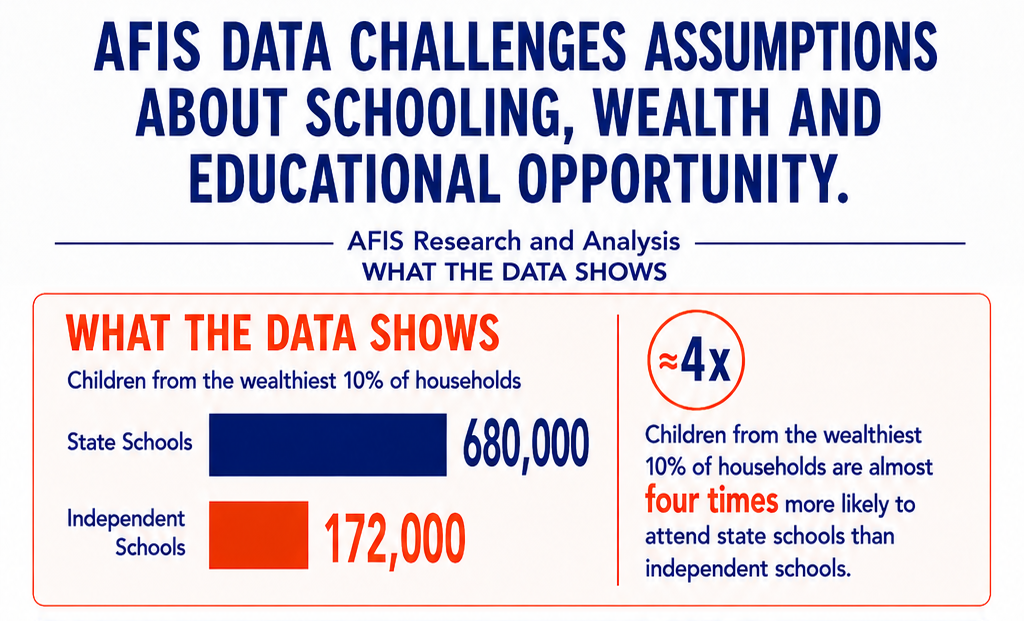
The aim of this research is to challenge misconceptions, highlight gaps in understanding and ensure that parental choice is considered in future public and policy discussions.